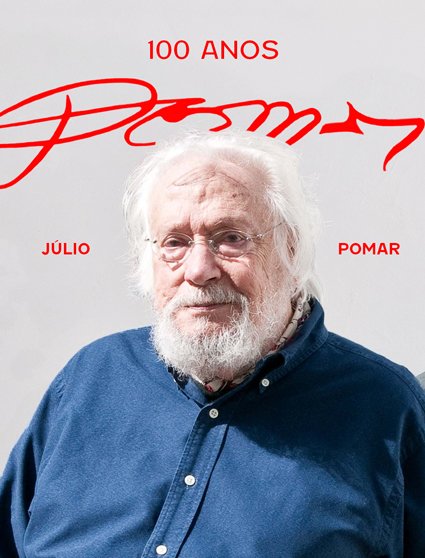
Jan. 21, 2026
Júlio Pomar: the centenary
We honor his life and work
One of the most remarkable Portuguese visual artists and a major figure in our culture, Júlio Pomar would have marked this month the centenary of his birth.
The broad and consensual admiration that his life and work continue to inspire bears witness to the exceptional artistic and humanist richness of a singular career, in which multiple languages and styles coexist with remarkable coherence.
As part of the centenary of his birth, CPS offers its Members exclusive conditions for the acquisition of the works currently available, valid until January 31.
We highlight one of the most symbolic works: the last print created at CPS, in 2016. In this piece, Júlio Pomar brings together elements from several decades of artistic creation: his hands, from the 1950s; the nudes drawn at the Atelier of Praça da Alegria (early 1960s) with Alice Jorge and António Charrua; recent objets trouvés, materialized in a fan and the scissors he used for studies of his compositions.
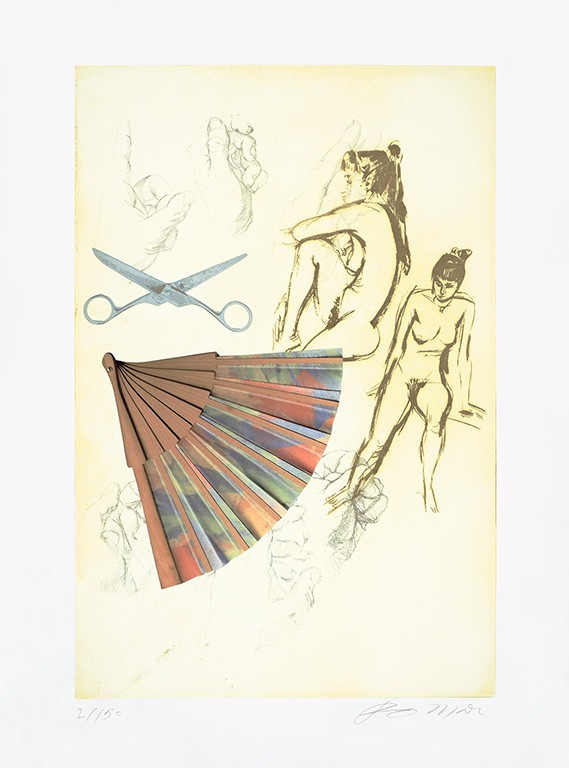
Júlio Pomar, Untitled, Print, Screenprint, Digital Print and Collage, 75x56 cm, 150 copies
A work that intentionally employed the various techniques of graphic art—printmaking, screenprinting and digital print—further enriched by individual collage.
Júlio Pomar began his artistic practice at an early age and, at 7, experimented with drawing on plaster. His obsession with drawing led him to the António Arroio School and later to the Schools of Fine Arts of Lisbon and Porto. He later withdrew from both, but by the age of 20 he already held the status of “artist.” He sold his first painting to Almada Negreiros.
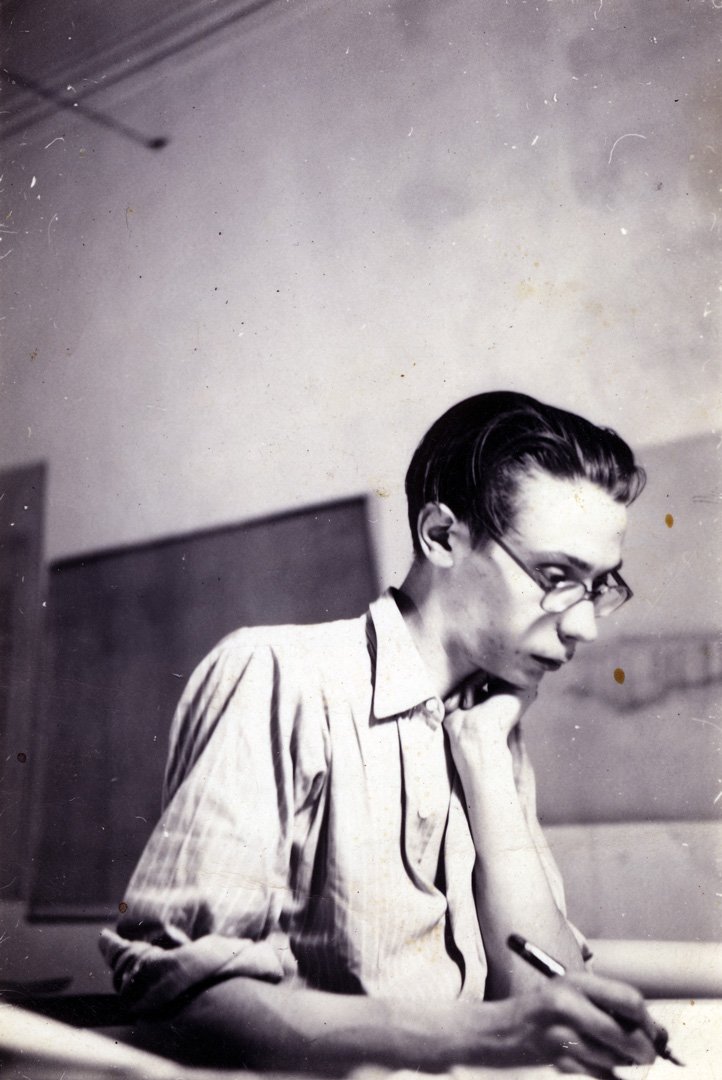
Júlio Pomar, Porto, 1945
© AMJP
He moved to Paris in 1963 and thereafter divided his time between the city and Lisbon. He was a grant holder of the Calouste Gulbenkian Foundation between 1964 and 1966. An active participant in student movements, a militant and founder of the MUD (Democratic Unity Movement), he was a victim of censorship and was imprisoned by the PIDE before completing his first commission, the mural for the Cinema Batalha. At this stage, his work was neo-realist.
Vast and multifaceted, his work includes striking homages to central figures of our culture, such as the portrait of Mário Soares—an irreverent and indispensable work for the way it deconstructs the protocol of official representations—as well as the iconic portraits of Carlos do Carmo, which became icons of Portuguese contemporary art.
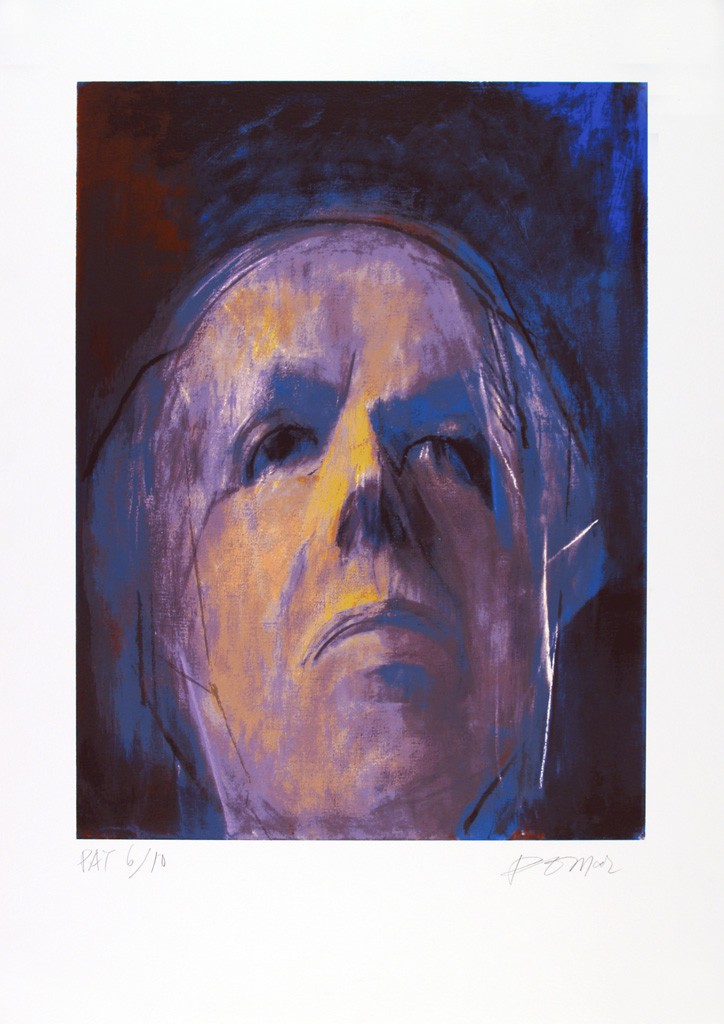
Júlio Pomar, “Carlos do Carmo (portrait)”, Screenprint, 70x50 cm, 100 copies
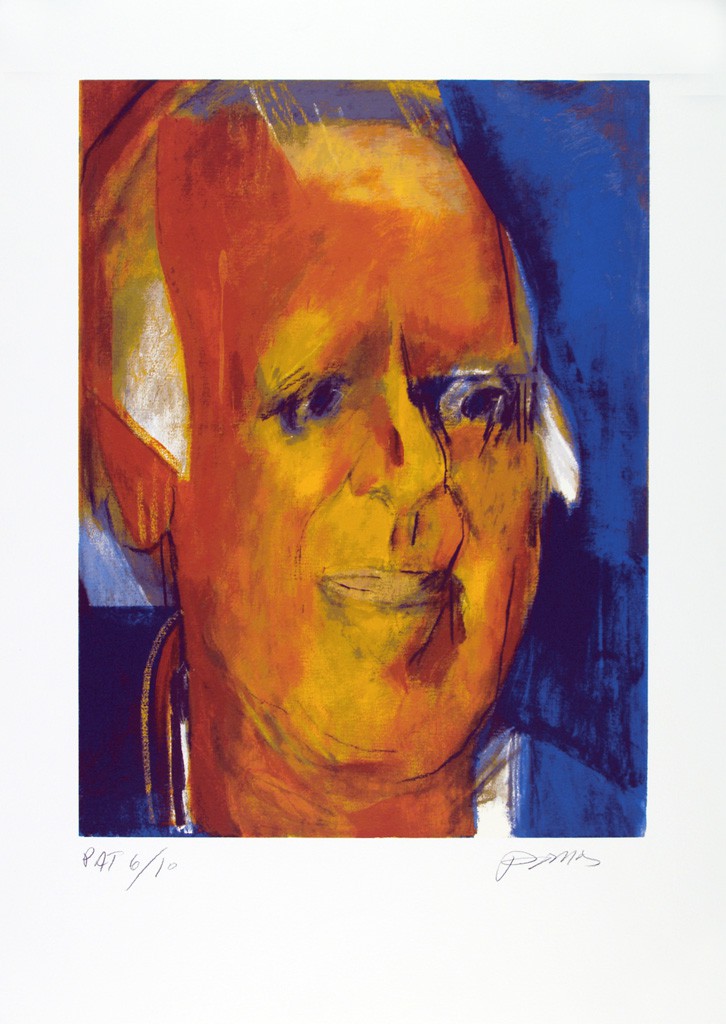
Júlio Pomar, “Carlos do Carmo (portrait)”, Screenprint, 70x50 cm, 100 copies
He held exhibitions in major international cities such as Paris, Brussels, Lisbon, Beijing and Macau. In the 1990s, Brazil hosted an important touring exhibition in São Paulo, Rio de Janeiro and Brasília. His work has been—and continues to be—widely recognized through tributes, awards and retrospective exhibitions.
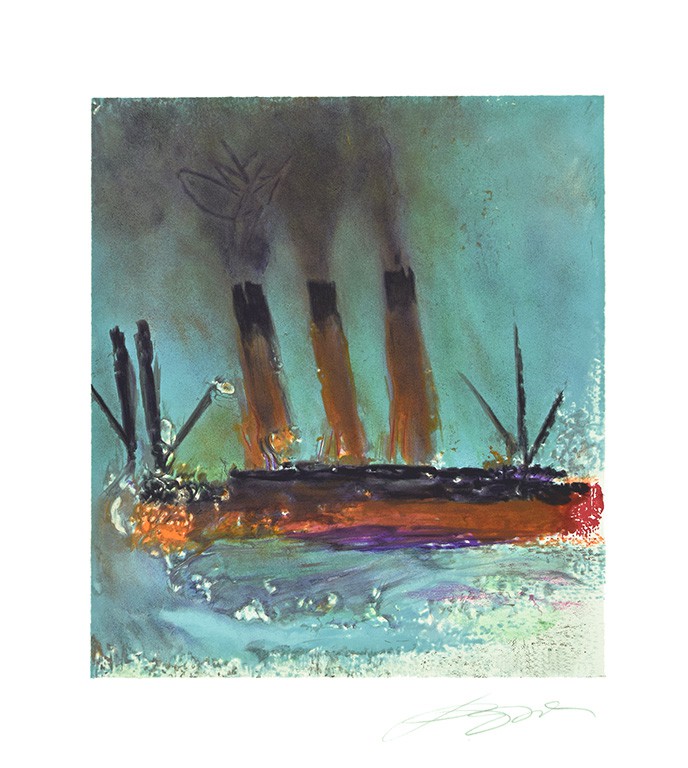
Júlio Pomar, “Paquete II”, Lithograph, 58x50 cm, 150 copies
In 2013, the Lisbon City Council inaugurated the Atelier-Museu Júlio Pomar, a project by architect Álvaro Siza Vieira. The space houses a collection of around 400 works, donated by the artist to the Júlio Pomar Foundation, including painting, sculpture, drawing, printmaking, ceramics, collages and assemblage.
Júlio Pomar was one of the most prominent Portuguese visual artists of the second half of the 20th century, honored by his peers and the public alike, with a body of work recognized both nationally and internationally.