June 22, 2026
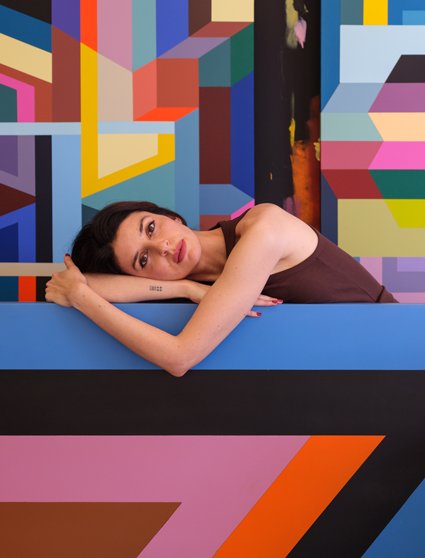
Ghizlane Agzenaï
Interview by Alexandra Silvano
The Moroccan artist Ghizlane Agzenaï has established herself as one of the most singular voices of the new generation of Moroccan contemporary art. Born in Tangier, her artistic practice brings together painting, sculpture, urban art, installation, and design, creating compositions that oscillate between abstraction, the visual languages of brutalist and futuristic architecture, and Moroccan cultural memory.
Her works, which she calls “Totems,” combine dynamic forms, chromatic rhythms, and geometric structures inspired both by the Op Art of Victor Vasarely and Bridget Riley, as well as by the Moroccan modernist legacy of Mohamed Melehi and the Casablanca School of the 1960s. Between public space and exhibition space, Ghizlane seeks to create sensory experiences and immersive environments that invite the viewer into an immersive experience with her works.
This collaboration with CPS follows the project “Roots and Horizons: Moroccan Art in the Feminine,” developed in 2024, now giving rise to new editions of graphic works, including two silkscreens, one of them in large format and, for the first time in her creative journey, exploring printmaking with an edition in three chromatic variations. This encounter with Atelier CPS represents an extension of her visual research, translating into graphic work the chromatic intensity, the energy of forms, and the experimental dimension that characterize her practice. At the same time, it strengthens the connection between the artist and CPS collectors, making accessible a deeply contemporary body of work rooted in Moroccan culture and tradition.
Who is Ghizlane Agzenaï and how has your personal journey influenced the construction of your artistic identity?
I define myself as a visual artist guided by intuition, curiosity, and the need to communicate through forms and colors. I seek to transmit love and light through my art. My artistic identity has been built through travels, research, and experimentation. For a long time, I searched for a strong visual language that would allow me to convey my message of joy and optimism, and it was through geometry that I found what I was looking for.
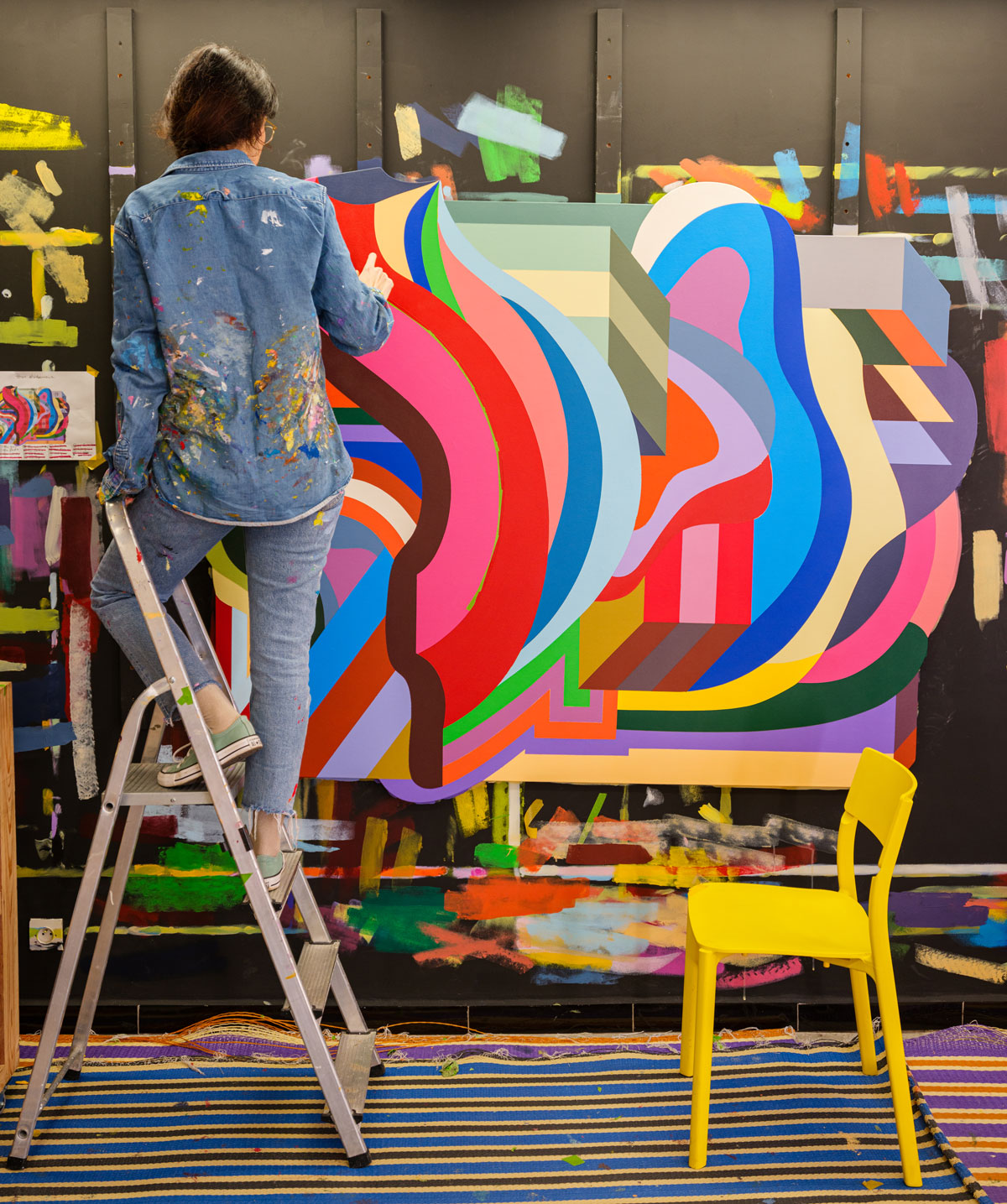
Ghizlane Agzenaï in her studio in Casablanca, Morocco. Photo: Joseph Ouechen
From an early age you developed an interest in drawing, architecture and the urban environment. How did this fascination with geometry, illusion and architecture emerge? What importance did modernist, brutalist and futuristic references have for you, such as the Spomeniks of former Yugoslavia or the brutalist buildings discovered in Vilnius (Lithuania)?
Geometry is, for me, the universal language par excellence; it transcends eras and borders. My fascination with illusion and architecture arose from the need to redefine space, to subtly disrupt the viewer’s perception and invite them to look beyond appearances.
Modernist and brutalist references, such as the Spomeniks of former Yugoslavia or the massive structures I discovered in Vilnius, created a real aesthetic shock for me. I see in them a raw poetry: these concrete giants, both futuristic and monumental, defy time and rise toward the sky. They demonstrate that architecture can be sculpture on a monumental scale.
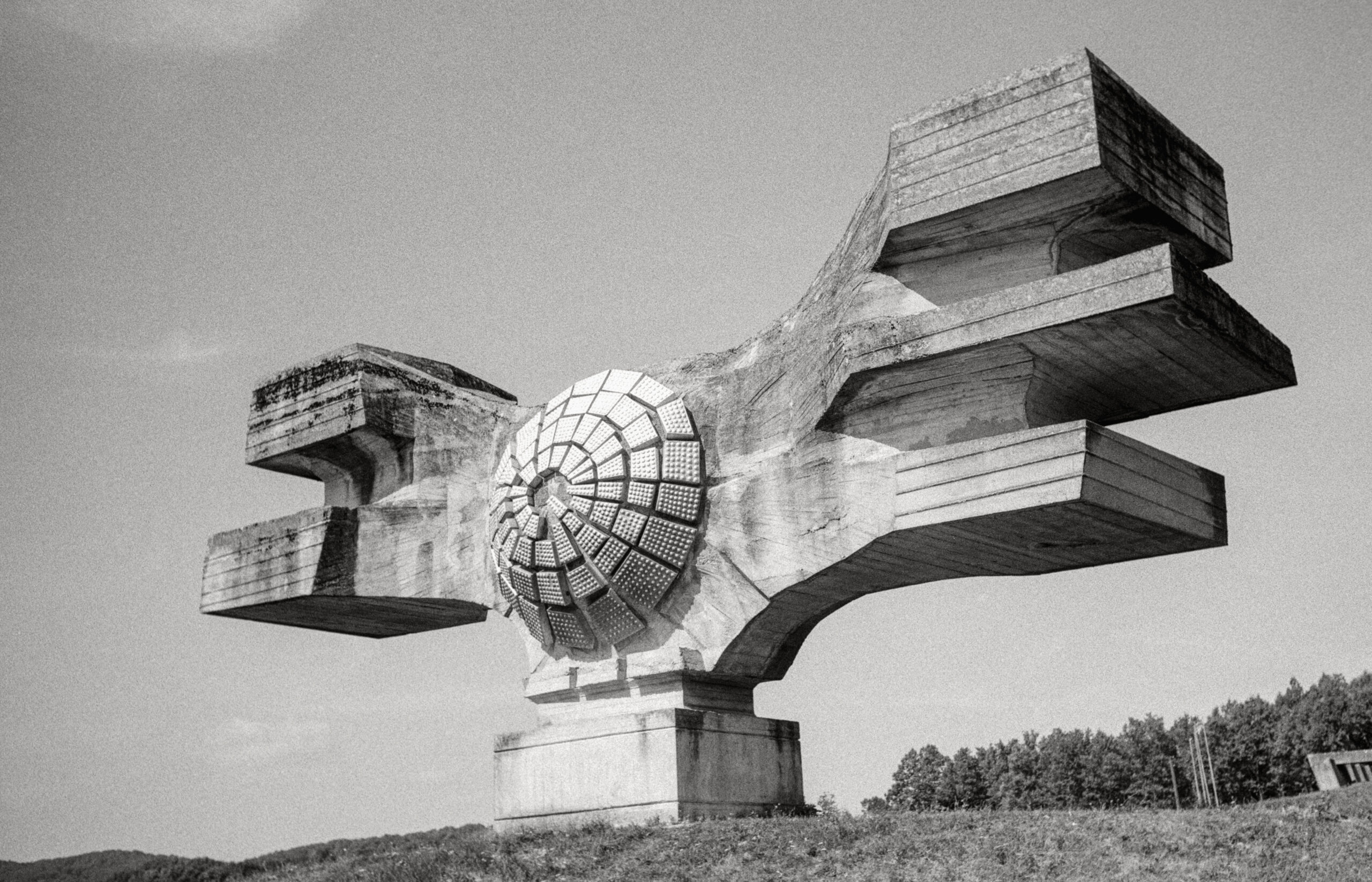
Spomenik, Dušan Džamonja, Croatia, 1967
Modernist and brutalist references, such as the Spomeniks of former Yugoslavia or the massive structures I discovered in Vilnius, created a real aesthetic shock for me. I see in them a raw poetry: these concrete giants, both futuristic and monumental, defy time and rise toward the sky. They demonstrate that architecture can be sculpture on a monumental scale.
Your work often combines painting, installation, design, sculpture and urban intervention, creating immersive environments where the viewer is invited to enter your visual universe. What do you seek to awaken in the audience through these experiences?
I aim to offer a moment of suspension, a break from the turmoil of everyday life. By bringing painting, sculpture and installations into dialogue, I don’t want the audience to be a passive observer: I want them to inhabit the work, to physically enter my universe. My goal is to provoke an immediate, almost physical emotion through the vibration of colors. I seek to awaken feelings of serenity, joy and optimism. It is an invitation to reconnect with one’s sensitivity, a kind of bubble of positive energy in a world saturated with information.
Your compositions evolved from rigid geometric structures to more organic curved forms. How did this transformation occur in your creative process?
It was a very natural evolution, alongside my personal and artistic maturity. At the beginning of my journey, geometric rigidity, right angles and symmetry reassured me. It was a way to channel chaos, to build a solid and almost mathematical structure.
Over time, I felt the need to introduce more fluidity and movement. Curved and organic forms represent life, breath, the cycle of nature and, in a way, a more feminine and intuitive sensitivity.
My creative process has become less rigid: today I allow the line to soften and evolve, so that the work acquires another dimension. I now enjoy alternating between both universes and blending them.
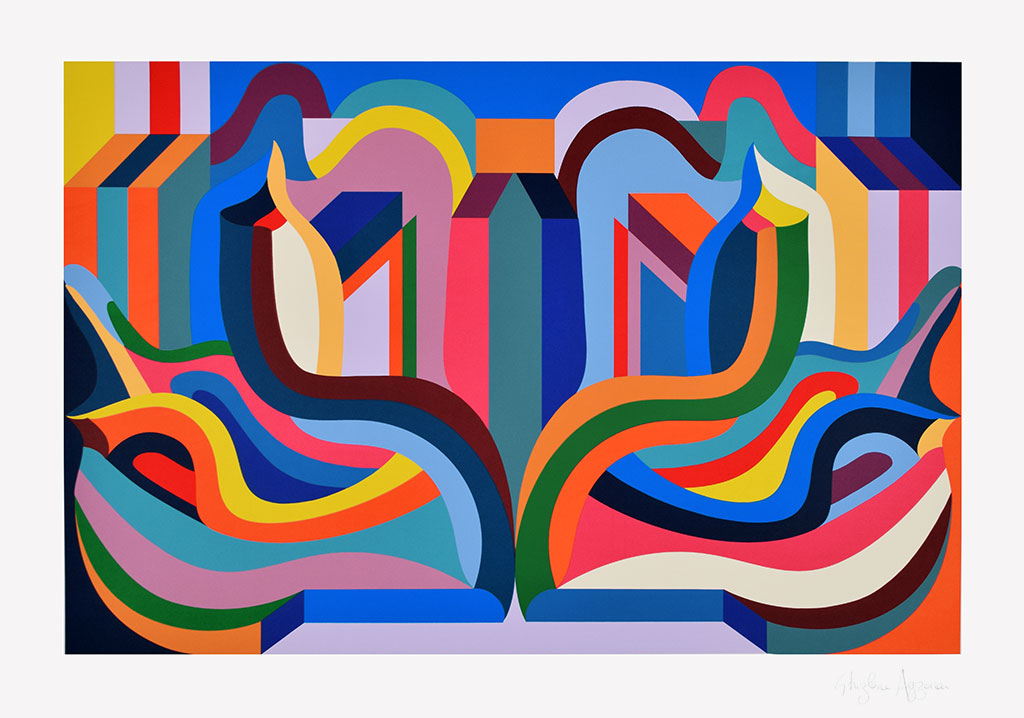
Ghizlane Agzenaï, Totem Alafdarinte, Silkscreen, 70x100 cm, Ed. CPS 2026
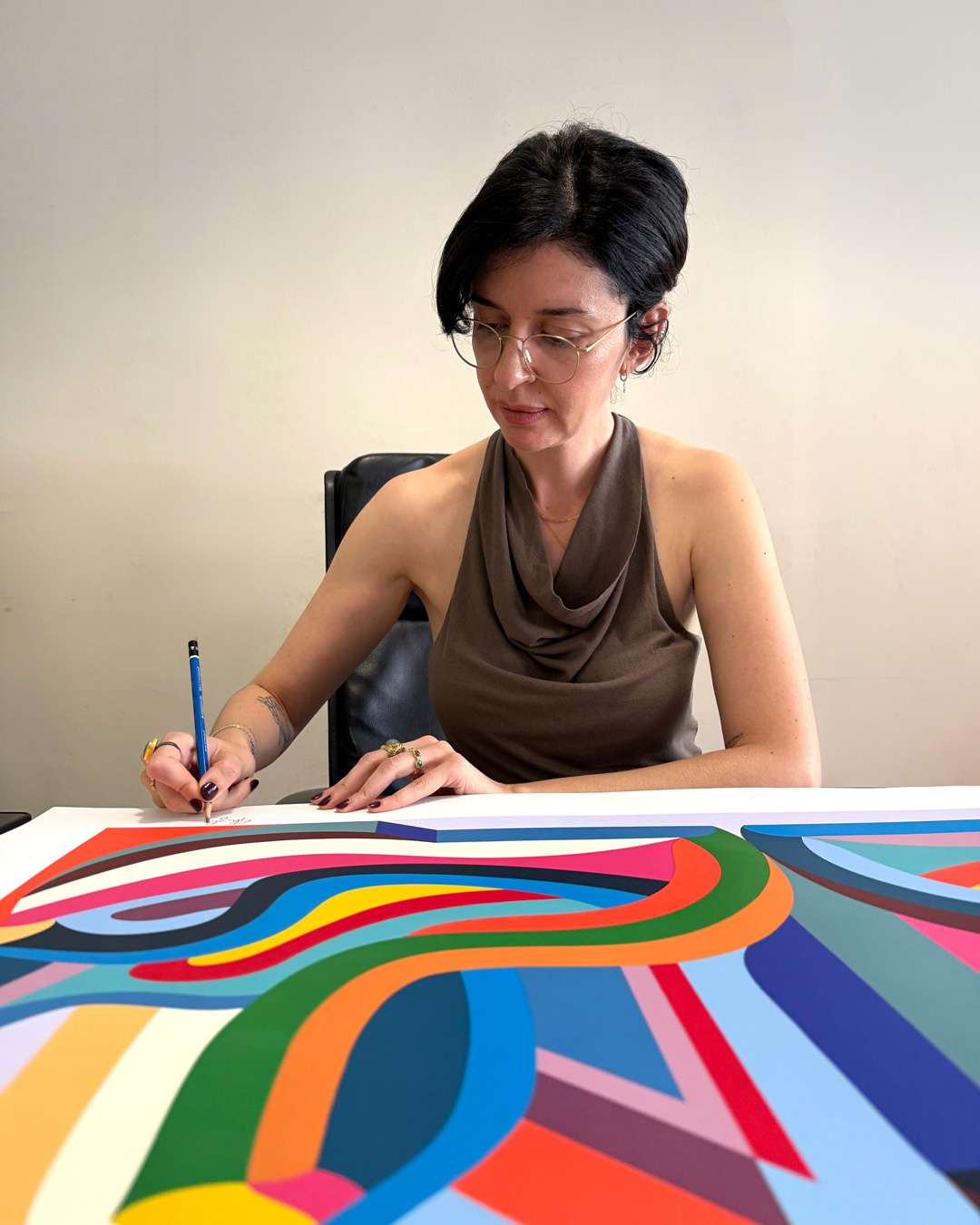
I don’t want the audience to be a passive observer: I want them to inhabit the work, to physically enter my universe.
You often refer to your works as “Totems.” What do these Totems represent and what spiritual, symbolic or social dimension do you seek to convey through them?
One of the definitions of the word totem is an object representing a benevolent spirit. That is exactly what I seek: to transmit love and light through my totems. They celebrate the energy of life. I conceive them as protective objects filled with good vibrations.
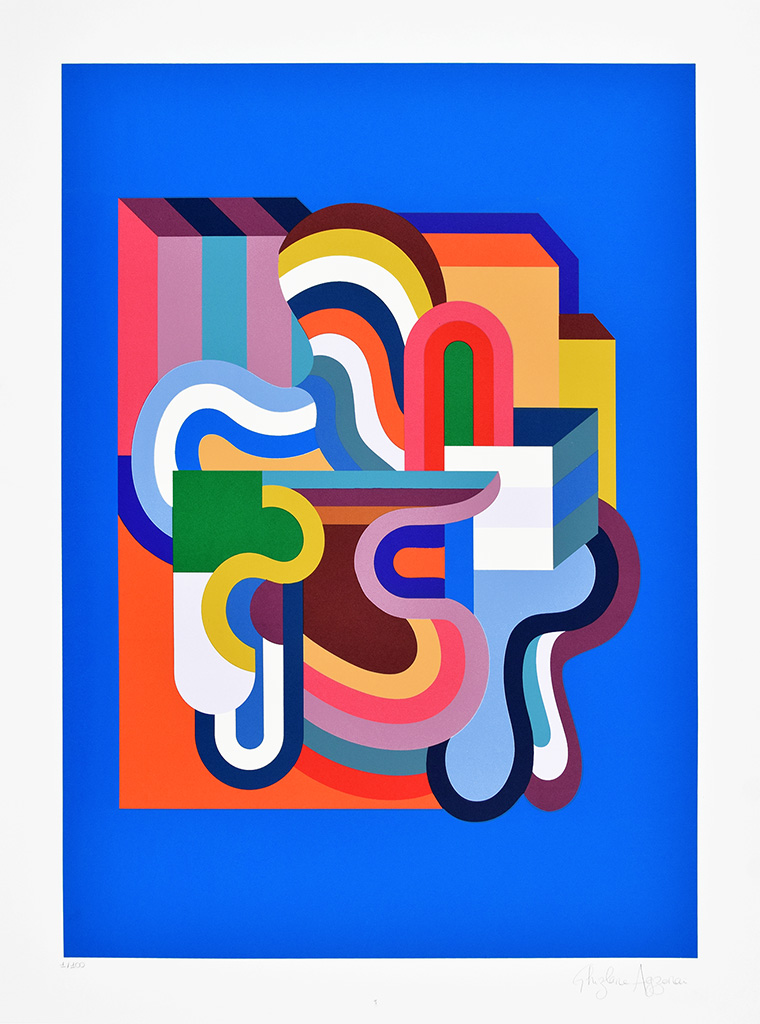
Ghizlane Agzenaï, Totem Dingolayinte, Silkscreen, 76x56 cm, Ed. CPS 2026
Color plays a very intense and energetic presence in your work. Do you consider color an emotional, architectural or even spiritual element?
Color is central to my work. For me, it brings together all three dimensions.
It is emotional, because it instantly determines a state of mind and directly reaches the heart. It is architectural, because a color can alter the perception of volume, create depth or light where there is none. Finally, it is deeply spiritual: each tone emits an energetic vibration. The choice of my palettes is a constant intuitive search for balance, to nourish the spirit of the viewer.
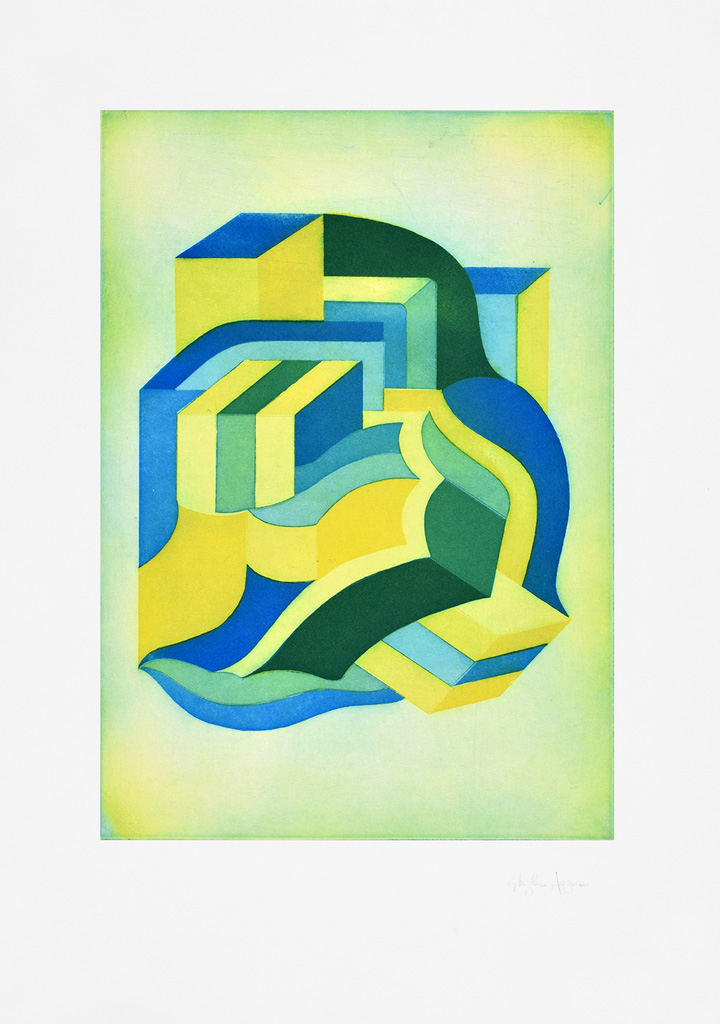
Ghizlane Agzenaï, Totem Irisinte II, Print, 71x50 cm, Ed. CPS 2026
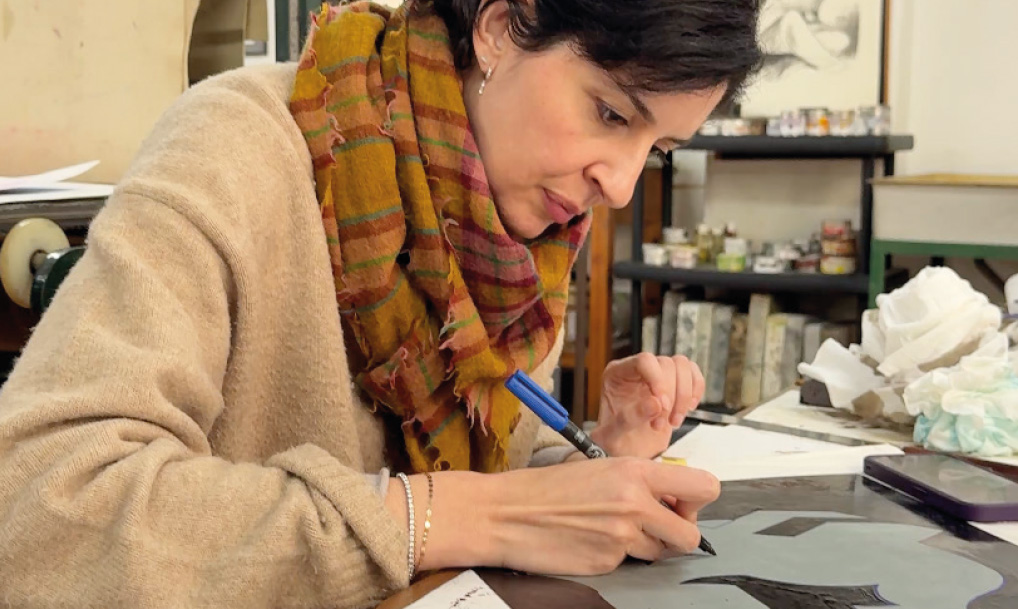
Ghizlane Agzenaï, Atelier CPS, 2026
Urban art played an important role in your journey, especially through its direct relationship with public space and people. Does contact with the city still influence your artistic creation?
Absolutely. The street was my first major space of expression. Urban art represents generosity for me: creating for everyone, without distinction. The city continues to influence my work every day. Its rhythm, contrasts, constantly shifting perspectives and the energy of its passers-by are an endless source of inspiration.
Even when I work in the studio in smaller formats, I carry within me this sense of scale from the street and the desire to make the work interact with its surrounding space.
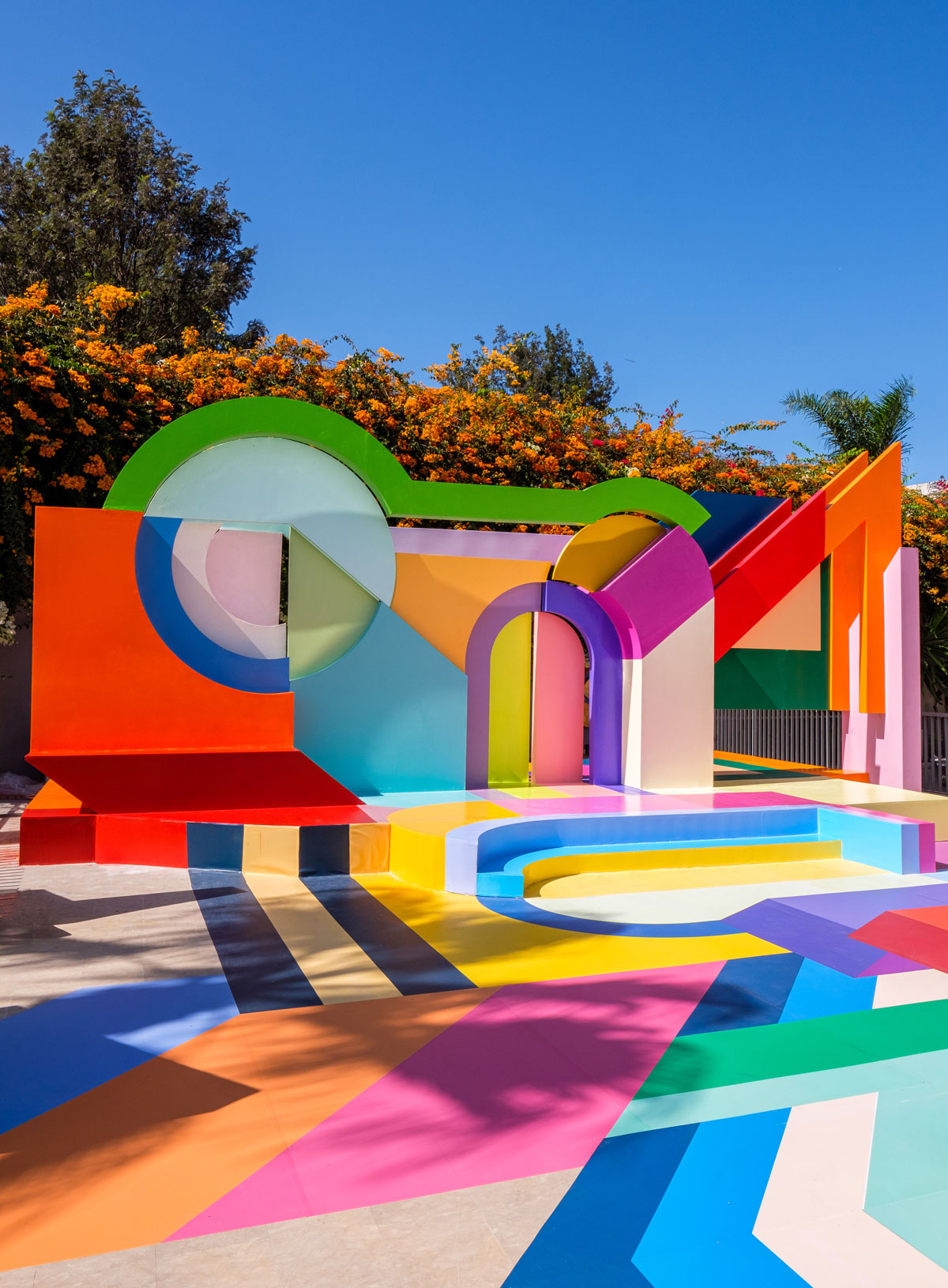
Dimension 2112 : Genesis, La Galerie 38, Casablanca, Morocco, 2023. Photo: Joseph Ouechen
Your work establishes a dialogue between Op Art, pop culture, science fiction and Moroccan visual tradition. What artistic and cultural references have shaped your journey?
I grew up influenced simultaneously by the retro-futuristic aesthetic of science fiction and Moroccan visual tradition, particularly zellige (a traditional Moroccan ceramic mosaic). I am also fascinated by Op Art movements and artists such as Victor Vasarely and Carlos Cruz-Diez, for their mastery of movement and optical illusion.
The choice of my palettes is a constant intuitive search for balance, to nourish the spirit of the viewer.
You have exhibited in different countries and collaborated with international institutions and brands such as Guerlain or Adidas. How have these experiences influenced your vision of contemporary art and your artistic path?
These collaborations were extraordinary accelerators of reflection. Working with prestigious houses such as Guerlain and Adidas pushed me out of my technical comfort zone. I had to transpose my codes—my Totems, my lines, my palettes—into new supports. This reinforced my belief that contemporary art should not remain confined to the canvas; it can also infiltrate everyday objects.
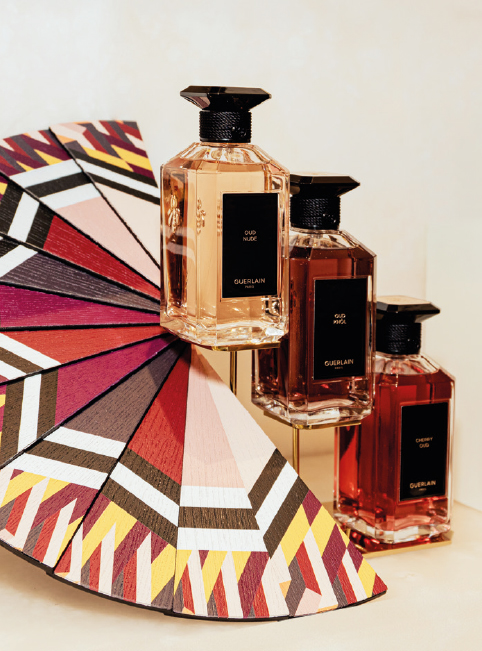
Ghizlane collaborates with international brands such as Guerlain, for which she developed the visual identity of a new perfume. Photo: Yasmine Bennis
The collaboration with CPS continues the project “Roots and Horizons: Moroccan Art in the Feminine.” How was it to translate your visual universe into graphic work and how important was the technical and creative dialogue with Atelier CPS?
Participating in the project “Roots and Horizons: Moroccan Art in the Feminine” is a great source of pride. It is essential to give visibility to the voice, strength and diversity of Moroccan women artists today. Translating my universe into graphic work was a very enriching process. The dialogue with CPS was a meaningful exchange of knowledge. I enjoyed spending time in the Atelier exploring different techniques and developed a real passion for printmaking. I thank the whole atelier team for their warm and benevolent welcome.
What message would you like to leave to CPS collectors and members who will discover these new editions of your work? And what paths or ideas would you like to explore in the future of your artistic journey?
I would like to thank the collectors and CPS members. By choosing these editions, they bring a part of my universe—and, I hope, a part of this positive and protective energy—into their homes. I like to think of these works as open windows to harmony and optimism in everyday life. In the future, I would like to further explore three-dimensionality and immersion. I want to experiment with new materials capable of interacting differently with light, such as glass, neon or textured metals, and continue creating unique experiences.