July 23, 2025
Tips for your Art Collection
Before starting an Art Collection, it is important to pay attention to what truly moves us. We should understand which works capture our attention the most, what emotional resonance they provoke in us, and what space for reflection or contemplation they are able to create.
We must not forget that we will live daily with this “living organism” and that, over time, we will build a relationship with it — through presence, observation, and the silent dialogue that art provides.
We can begin by identifying the motivations that lead us to this process: are we buying out of enthusiasm and passion, or with knowledge and investment intention? Are we looking to support young and emerging artists, or do we prefer to acquire works by already established authors?
Whatever the approach, having a general knowledge of art, artists, their thoughts and contributions — as well as their historical and social relevance — is always an asset. Visiting cultural institutions, attending exhibitions, galleries, and museums, and engaging with different artworks allows us to acquire knowledge and cultivate greater openness to the world.
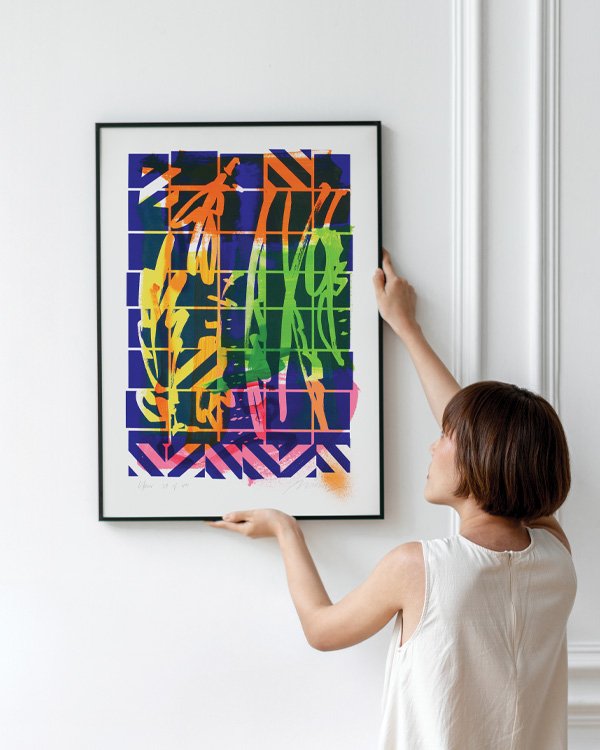
MARIA JOSÉ OLIVEIRA, “Path to Infinity”, Screenprint and digital print with collage.
Featured artist in the permanent exhibition of the new CAM Gulbenkian

JAS, “Lack of Coincidence Series – Spring”, Screenprint
Winner of the Sovereign Portuguese Art Prize 2024
Practical Advice
It is important to have information about the origin of the work and its authenticity, to check the signatures, and in the case of graphic works, also the numbering. At CPS, all works produced in our Workshop have the white certification seal. We also provide information about the artists and their background, which contributes to a more thoughtful acquisition. In galleries, we advise on ways to keep works in good condition, for storage and display.

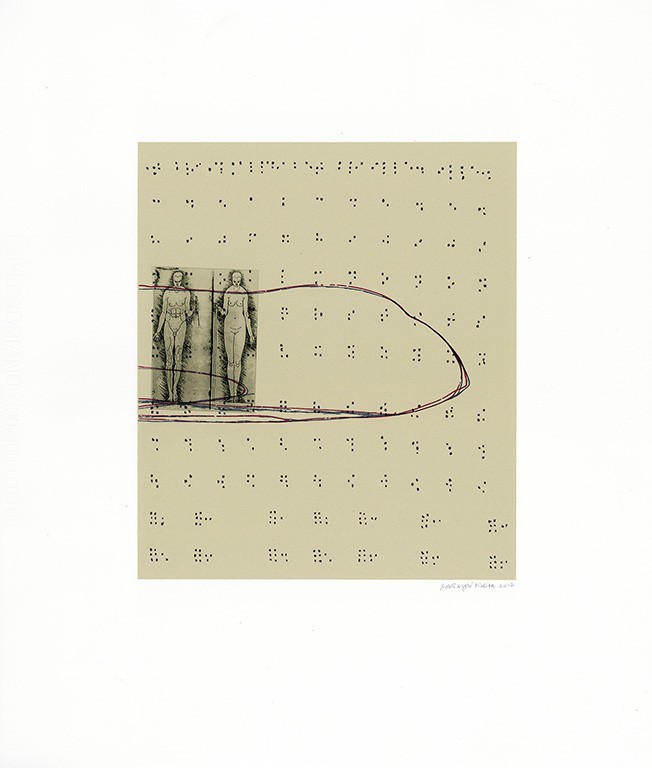
JORGE BARROTE, “The Words”, Lithograph
The Importance of Graphic Art
Graphic art holds a fundamental place in the art world, from historical, artistic, cultural, and economic perspectives.
One of the greatest contributions of graphic art is the possibility of making art accessible to more people: first, because it is produced in multiple editions, it usually has lower values than unique works. Second, because it allows more people to have contact with original art and start collecting with quality and discernment.
CPS’s main motivation is the democratization of art and access for an increasing number of people to culture, beauty, and critical thinking.